
We pride ourselves on doing great work that delivers big impacts. Check out these examples of how we do it.
Strengthening the Organic Workforce Through Data-Driven Needs Assessment
- Transition to Organic Partnership Program (TOPP) / Oregon Tilth
Nexight conducted a national workforce needs assessment for the Transition to Organic Partnership Program to provide actionable recommendations to enhance training pathways, increase education opportunities, and expand workforce capacity across the U.S. organic sector.
The Challenge
Workforce Shortages Threaten Organic Sector Growth
Annual farm inspections are the cornerstone of the organic certification system. Following a decade of strong growth in organic sales, a shortage of well-qualified inspectors threatens to degrade consumer trust in the USDA organic label. TOPP recognized a need to not only address the current shortage but also develop an even larger and more skilled certification workforce to protect organic integrity; however, they lacked a clear, industry-wide picture of the current state of the organic inspector and reviewer education and workforce landscape from which to begin.
TOPP tapped Nexight to lead this assessment effort based on our deep understanding of and experience with the organic market and certification system and our long-term support of USDA, coupled with the technical expertise of our education and workforce development (EWD) specialists.
Our Solution
A National Workforce Needs Assessment Grounded in Stakeholder Data
Our assessment approach combined workforce data analysis with direct stakeholder engagement to ground findings in real-world experience:
Survey Design and Analysis
- Designed and administered a targeted survey of organic inspectors, certification reviewers, and certifiers to gather perspectives on education and training experiences, entry points, demographics, professional pathways, and barriers
- Findings captured both quantitative patterns and qualitative insights to inform a broad understanding of systemic organic industry workforce challenges
Stakeholder Interviews and Engagement
- Conducted in‑depth interviews with key stakeholders—including certifiers, inspectors, the International Organic Inspectors Association (IOIA), and the USDA National Organic Program (NOP)—to gain first‑hand insight from those directly engaged in the industry
Research, Data Collection, and Labor Market Analysis
- Analyzed the survey and interview results together with workforce data from sources such as the Bureau of Labor Statistics (BLS) to establish baseline trends and identify challenges and workforce barriers within the organic inspection and certification community affecting entry, growth, and retention
Education, Training, and KSA Pathway Mapping
- Mapped existing education and training pathways and qualifications, as well as the knowledge, skills, and abilities (KSAs) associated with organic inspection to help identify barriers and gaps affecting workforce readiness and professional progression
Nexight then analyzed and translated these findings into clear, actionable recommendations to support TOPP and its partners in strengthening training pathways, addressing skill gaps, and improving workforce capacity across the organic sector.

Impact
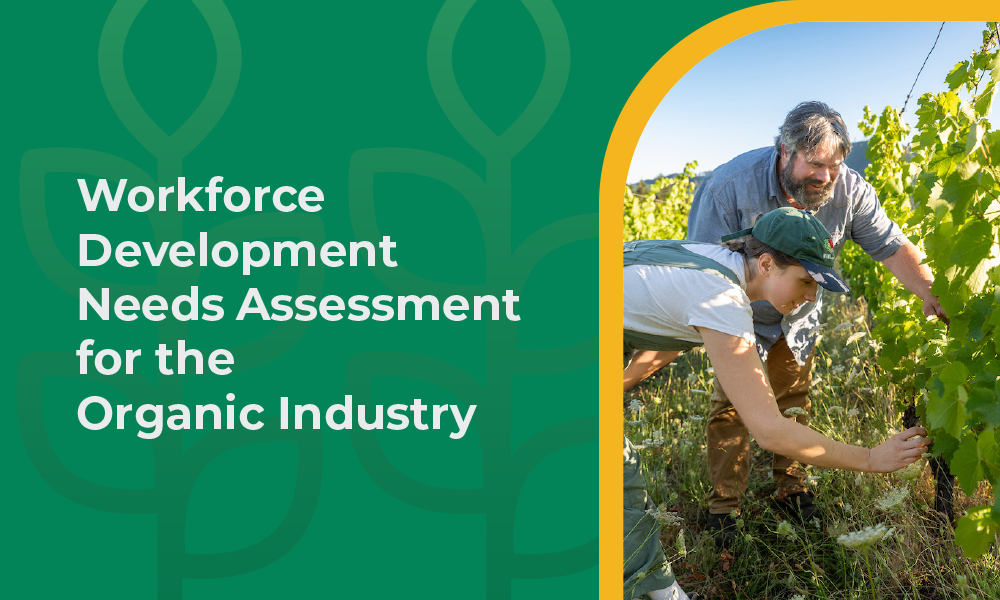
The 2025 Workforce Development Needs Assessment for the Organic Industry
- Serves as foundational research for TOPP and its partners and is being used to inform next-phase initiatives to increase training and education opportunities for organic inspectors
- Provided actionable, data‑driven recommendations to address immediate and long-term skill gaps, training challenges, and workforce capacity constraints
- Created a set of recommendations that TOPP and its partners can use to guide future training investments and workforce development efforts
Leveraging the assessment to develop a larger and better-qualified inspection workforce will provide the oversight needed to maintain growth in the organic market—ensuring continued opportunity for American farms and businesses.